why my dream home server setup is still sitting in a box
I have the hardware, the skills, and the desire. So why haven't I built my homelab yet? Here are the honest reasons keeping me on the big cloud platforms.
- neuralshyam
- 5 min read
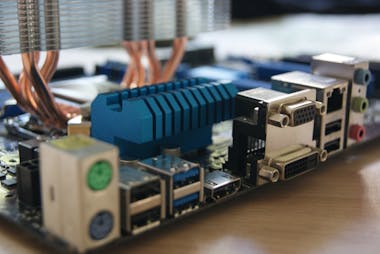
Look, I live in a sea of silicon. As someone who reviews tech hardware for a living, my desk is basically a graveyard of high-end components, single-board computers, and enough cables to wire a small spaceship.
I love the idea of self-hosting. I browse the subreddits. I watch the YouTube tutorials where some guy sets up a Kubernetes cluster in his garage. I nod along, thinking, “Yes, this is the way. Down with Big Tech. Up with digital sovereignty.”
I even have the gear. I’ve messed around with the ZimaBoard 2 (cool piece of kit, by the way), tested various NAS setups, and have more spare hard drives than I have pairs of shoes. The stage is set. The hardware is ready.
And yet? Nothing.
I am still fully plugged into the Matrix. Google has my photos, Netflix serves me my movies, and my “home lab” is currently just a theoretical concept living in my head. Why? Is it fear? Incompetence?
Actually, it’s usually just four very annoying, very human things getting in the way.
the “good enough” trap of convenience
Here is the dirty secret about Big Tech: their products actually work.
I know, I know. Privacy concerns, data mining, corporate overlords—I get it. But when I want to watch a movie on a Tuesday night after a long day, Netflix just plays the movie.
If I were self-hosting a media server (like Jellyfin or Plex), the process looks a little different. First, I have to acquire the media (legally, of course… wink). Then I have to organize the metadata. Then I have to make sure the server is transcoding correctly so it doesn’t buffer on my TV.
Do I really need a massive digital library of movies I watched in 2014? Am I actually going to re-watch Inception enough times to justify keeping a 50GB file spinning on a hard drive in my closet? Probably not.
The friction of the cloud is zero. The friction of self-hosting is non-zero. When you’re tired, zero wins every time.
the math doesn’t always check out
There is a common myth in the homelab community that self-hosting saves you money. People say, “Cancel your Dropbox and iCloud! Stop paying for Spotify! Run it yourself for free!”
“Free” is doing a lot of heavy lifting there.
Let’s break it down. To self-host reliably, you need hardware. Even if you use a Raspberry Pi or a ZimaBoard, you’re dropping a few hundred bucks on the unit, the power supply, and the actual storage drives. Hard drives die, so you need backups. That means more drives.
Then there is the silent killer: electricity.
Running a server 24/7 adds up. Depending on where you live and the efficiency of your rig, that electricity bill is basically a subscription fee you pay to the power company instead of Google.
I keep my digital life pretty lean. I don’t have 50 subscriptions to cancel. So, swapping a $2.99 iCloud tier for a $500 hardware investment plus monthly electricity costs? The ROI (Return on Investment) calculator just laughs at me.
the networking rabbit hole is deep
Setting up a NAS to store files on your local network? Easy. My grandma could probably do it if I wrote down the instructions clearly enough.
But true self-hosting—where you access your services from anywhere in the world—is where things get spicy.
Suddenly, you aren’t just a guy with a hard drive; you’re a sysadmin. You run into fun roadblocks like:
- ISP Issues: “Oh, you wanted a static IPv4 address? Sorry, we don’t do that here.”
- Security Paranoia: Opening ports on your router is like leaving your front door unlocked.
- The Fixes: Now you’re learning about Tailscale, Cloudflare Tunnels, reverse proxies, and SSL certificates.
I do tech support for a living (sort of). The last thing I want to do at 9 PM is debug why my reverse proxy isn’t shaking hands with my SSL certificate properly. The learning curve isn’t a curve; it’s a cliff. And sometimes, I just don’t have the climbing gear.
the ultimate currency: time
This is the big one. The boss battle.
I have kids. If you have kids, you know that “free time” is a mythical concept, like unicorns or a printer that works on the first try. My hours outside of work are claimed by tiny humans, household chaos, and the basic need to sleep.
Self-hosting isn’t a set-it-and-forget-it deal. It requires maintenance. Updates break things. Dockers crash. configs get corrupted.
Every hour I spend troubleshooting a Nextcloud instance is an hour I’m not spending with my family, or gaming, or just staring at a wall in silence. Is the satisfaction of owning my data worth the weekend afternoons lost to the terminal screen?
Sometimes yes. Usually no.
am i just making excuses?
100%. Absolutely.
Reading this back, it sounds like I’m hating on self-hosting. I’m not. I actually think it’s one of the coolest hobbies you can get into. It teaches you how the internet actually works. It gives you control. It’s digital independence.
These barriers I listed aren’t stop signs; they’re just speed bumps. And despite everything I just wrote, I know myself. I’m going to do it anyway.
The itch to tinker is too strong. I’ll probably start small—maybe just a Pi-hole to block ads, or a simple file server. I won’t do it because it’s cheaper (it won’t be) or easier (it definitely won’t be). I’ll do it because it’s fun to build things.
But until I find that magical spare weekend, my ZimaBoard stays in the box, and Google keeps my photos. Don’t judge me.
- Tags:
- Networking
- Hardware
- DIY